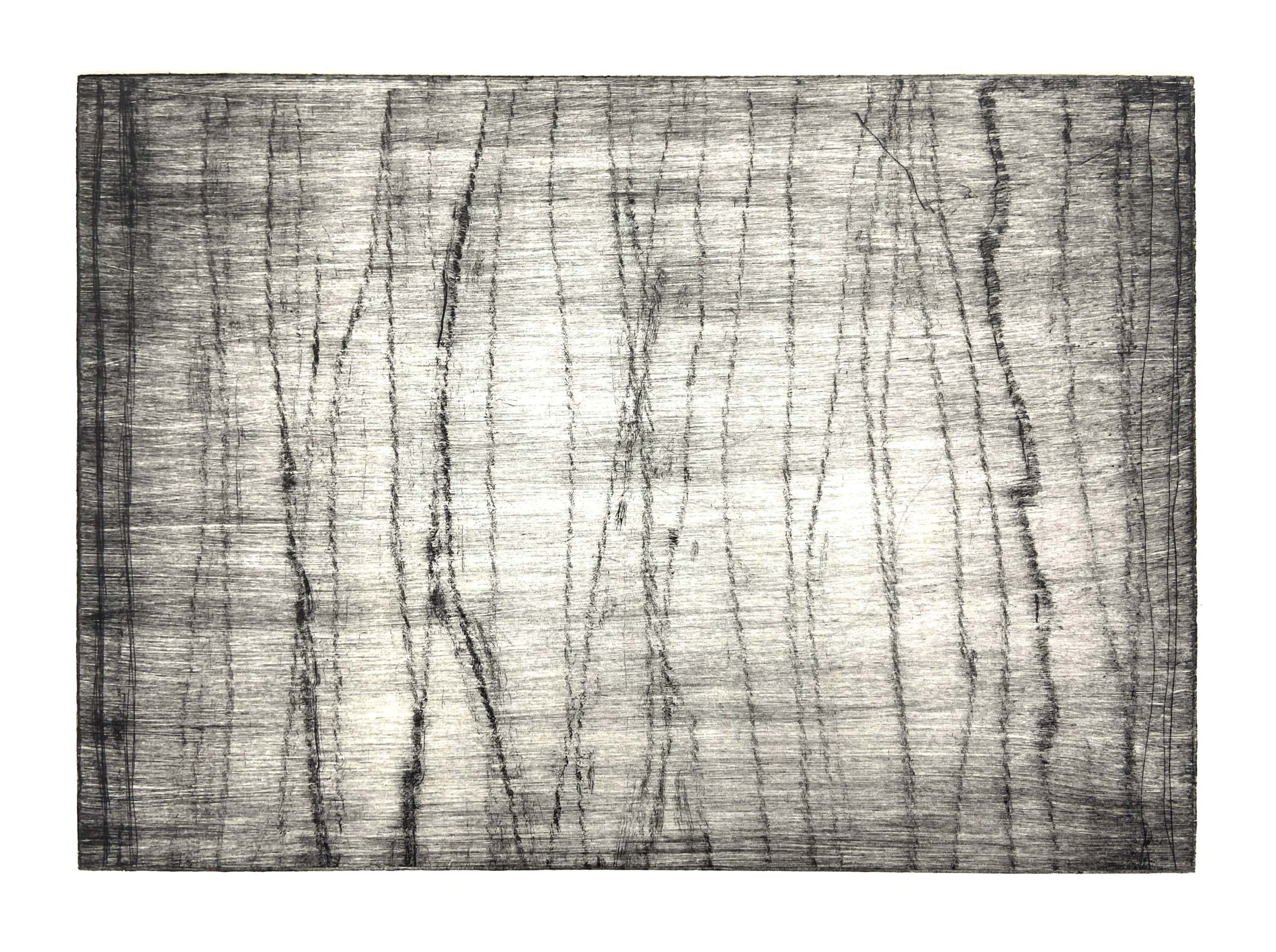
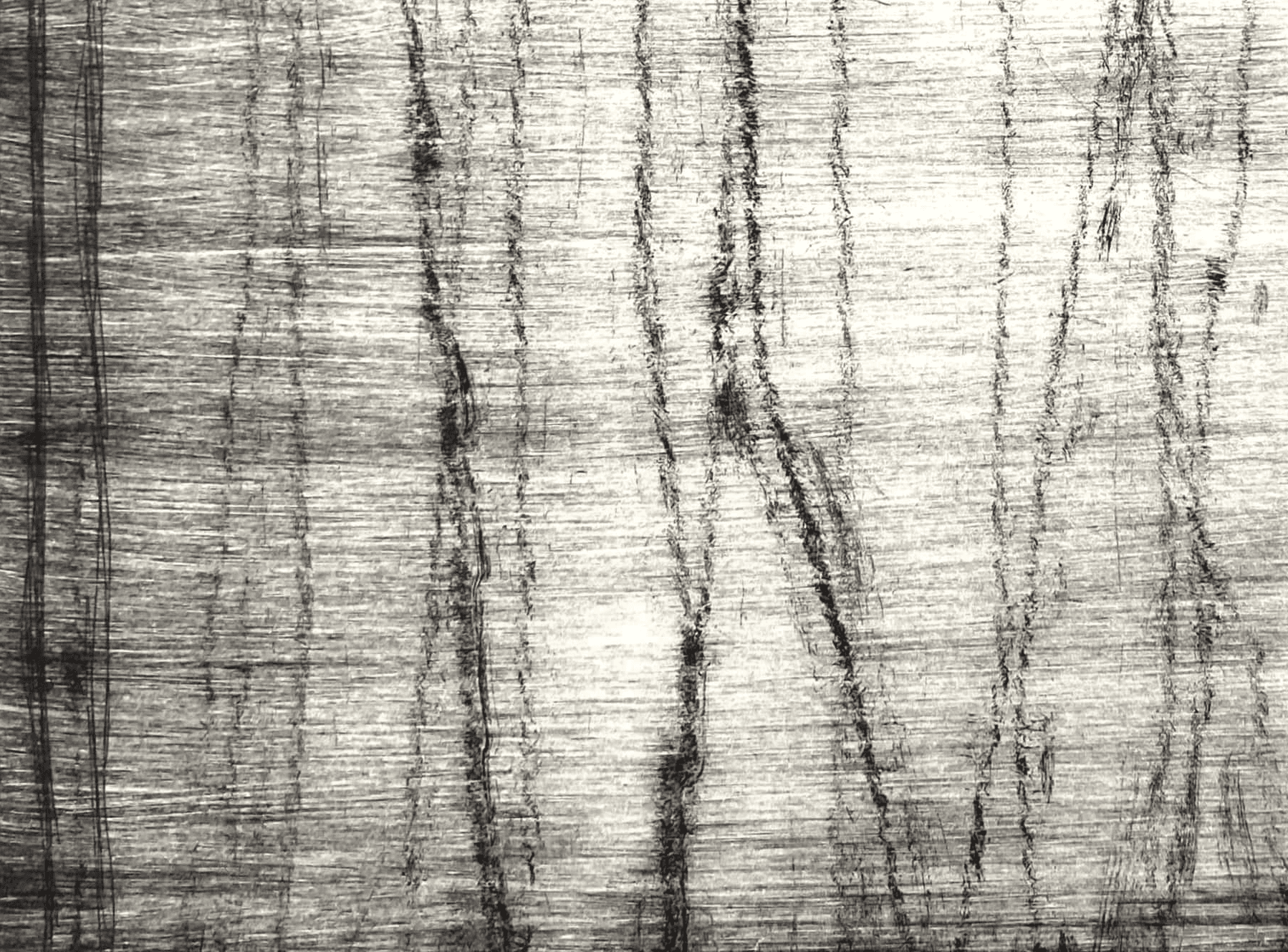
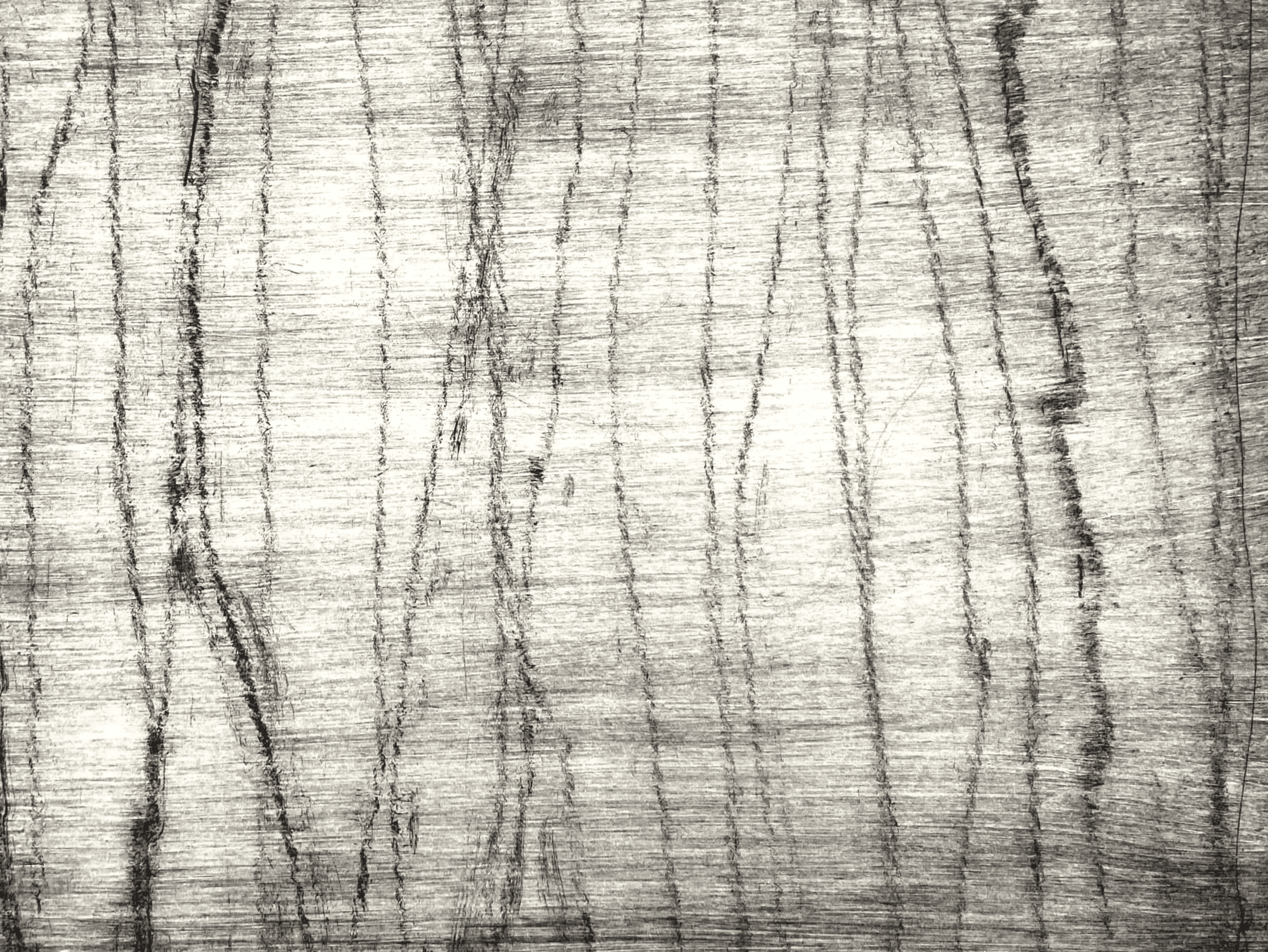
Manuscript I and Manuscript II are single-edition etching prints created from a single plate to serve as a material inquiry into South Asian manuscripts from the 5th to 13th centuries.
The work focuses on the specific physical textures of bark, palm leaf, and early paper used to preserve sacred knowledge across centuries. To achieve this, the impressions were created by pressing twine into the etching ground, while the distinct textures of each print were developed during the inking process by wiping the ink with a textured rag in two different motions. By doing so, a tactile surface was created that mimics the fibrous decay and organic weathering of historical documents.
Manuscript I, 2024
Single edition etching print
23 x 30 cm
[Sold]
Manuscript I and Manuscript II are single-edition etching prints created from a single plate to serve as a material inquiry into South Asian manuscripts from the 5th to 13th centuries.
The work focuses on the specific physical textures of bark, palm leaf, and early paper used to preserve sacred knowledge across centuries. To achieve this, the impressions were created by pressing twine into the etching ground, while the distinct textures of each print were developed during the inking process by wiping the ink with a textured rag in two different motions. By doing so, a tactile surface was created that mimics the fibrous decay and organic weathering of historical documents.
Manuscript I, 2024
Single edition etching print
23 x 30 cm
[Sold]
Manuscript I, 2024
Single edition etching print
23 x 30 cm
[Sold]
Manuscript I and Manuscript II are single-edition etching prints created from a single plate to serve as a material inquiry into South Asian manuscripts from the 5th to 13th centuries.
The work focuses on the specific physical textures of bark, palm leaf, and early paper used to preserve sacred knowledge across centuries. To achieve this, the impressions were created by pressing twine into the etching ground, while the distinct textures of each print were developed during the inking process by wiping the ink with a textured rag in two different motions. By doing so, a tactile surface was created that mimics the fibrous decay and organic weathering of historical documents.